Showing posts with label Memoir. Show all posts

Tuesday, October 22, 2013

Tips from Graham Nash

Music is the presiding factor in Graham Nash’s life.  He opens his book, Wild Tales with this line:  It always comes down to the music.  It is his driving force. It’s the reason he kept agreeing to Crosby, Still, Nash and Young regroupings.  From the moment he met David Crosby, he knew they had a connection and it was through their music.  He became good friends with him, which is probably why Crosby’s descent into drug addiction is the hardest part of the book to read. 

I was never a CSN fan, but appreciated their talent.  Me being a sucker for musician memoirs, I had to read Wild Tales.  I can’t say it’s one of my favorites, but it was a nice read. 

Tips from Graham Nash:

On Managing Money:
“When it was over, the entire tour made close to $12 million, but David, Stephen, Neil and I only got $300,000 each.  That Left $10.8 million unaccounted for, by my arithmetic.”
(Summer 1974 Tour CSNY.  There was crazy excessive spending on that tour and of course, lots and lots of drugs.)

On Dating:
The first date with his not-yet-wife Susan:  “I spent most of that night trying to figure out how to make myself more attractive to this woman. Aha! Now I knew what to do.  I’ll get up in a tree, I thought.  (Don’t even try to attempt to follow this reasoning.) So fifteen minutes before she was supposed to show up, I climbed into a tree outside our bungalow at the Chateau.    And, believe it or not, this stunt actually worked. 
(She told him she had been to a self-exploration conference, which prompted him to think of hiding in a tree.)

On the drama of being in a band:
I know what you’re thinking; didn’t we learn a thing or two about four superegos trying to coexist in one studio?  Why in heaven’s name were we gonna do that again?  But it’s the music.  It’s always the music.  It’s like a drug, irresistible.  And we’re both smart enough-and-dumb enough-to recognize that. 

What I didn’t know about Graham is that in 1990 he started Nash Editions, which is  a fine arts digital print making company.  

Graham will be touring on the West Coast in November.   
Howard Stern's interview with Nash.  

Tuesday, August 13, 2013

C'mon She's Happy

Happy – This is something Shirley Jones seems to have remained for her entire life, even while married to the scoundrel (I use that word based on her writings), Jack Cassidy.

Shirley Jones: A Memoir is another autobiography that starts off promising.  Tales of her childhood in Pennsylvania are charming. Her grandfather founded The Jones Brewery Co that produced Stoney’s Beer.  Legend has it the name came from a dog that Shirley’s grandfather loved. When the dog died, he took the nickname Stoney.  She was a troublemaker, lover of the outdoors and animals.  She thought she would be a veterinarian. She took singing lessons.  She was Miss Pittsburgh in 1952 and received a two years scholarship to drama school.  She never made it to college. 

On a trip to New York with her parents, she called an old friend who told her about a Rodgers and Hammerstein casting director holding an open audition at the St James Theatre that same day.   With no Broadway experience, she auditioned.  That casting director, John Fearnley was so impressed that he had Richard Rodgers come to hear her.  “I cringe with embarrassment at how quickly and easily everything unfolded for me.  It was as if a magician had waved his wand and effortlessly raised the curtain on my career.”  In that first audition Rodgers said to her “Miss Jones, we would like to make you an offer.”  It was for a spot in the chorus of South Pacific.  A year later she’s Laurey Williams in the film version of Oklahoma.

She becomes a Hollywood darling, who enjoyed playing against typecast, taking on a sultry role when offered.  While on a European tour of Oklahoma, she meets her Waterloo (her words), Jack Cassidy.  She’s warned about his philandering, but can’t resist his charm. He’s still married to Evelyn Ward (David Cassidy’s mother), but that ends and Shirley and Jack tie the knot. She achieves fame and her story starts to reveal itself in print, like way too many others.  If it's not drugs (and in her case it isn't), it's trivial gossip.  She offers a little too much information: sex, more sex and the size of her husband and stepson’s anatomy.  David’s brothers nicknamed him donkey.  Did we need to know that? Why am I repeating it? Unfortunately, this will remain in my brain until I die. 

Shirley and David
The touching and revealing parts of the book surprisingly belong to her relationship with David Cassidy.  When she first married Jack, she stayed out of his relationship (or lack of) with his son.  David slowly warmed to her and she fondly refers to him as her son.  Shirley loved working with him on the Partridge Family.  She took the role after turning down the part of Carol on the Brady Bunch. She wanted to do more than pull a roast out of the oven.  Shirley Partridge was a working mom. 

This book would have been a gem if she delved into her craft and how she developed it with virtually no acting experience. She was the only person under personal contract with Rodgers and Hammerstein.  When she talks about life on the set of the Partridge Family, it’s interesting.  I got bored very quickly with stories of Jack’s infidelity.  (She finally leaves Jack, when she thinks he is a danger to their sons.)  I’m sure publishers are keen on getting the gossip.  I’m not sure if it still sells books to tell all and then some.  One thing that is almost absent from this book is drug/alcohol abuse.  Jack was an alcoholic and that’s basically what cause his death, but she wasn’t and it was refreshing not to be belabored with those tales.  

At 79, Shirley still continuously works. I loved her on Drew Carey’s show.  She looks fantastic and has a successful marriage to the irrepressible comedian Marty Ingles.  Staying sane in Hollywood is not easy.  C’mon get happy:  Shirley’s there. 

Tuesday, August 06, 2013

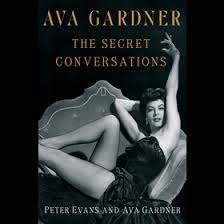
The Ava Gardner Conversations


Bastards are always the best survivors. -On why Frank Sinatra would outlive her. 

I could never take Surrealism seriously after that.  -Said after her crazy meeting with Salvador Dali in Spain. 


Tough, beautiful, self-depreciating, loving a good joke and manipulator, this is how I see Ava Gardner after reading Ava Gardner:  The Secret Conversations. 

What was suppose to be her tell all book, turned into a post mortem collection of conversations for both Ava Gardner and the author Peter Evans.  Rumor has it that she canned the idea of this book after telling Frank Sinatra about it.  He supposedly asked her what the publisher was paying her for the book.  He sent her a check for that amount not put it out. In 1990 she released Ava:  My Story without the participation of Peter Evans. 
 The kernel of the book began in January 1988 when Ava approached Evans about ghost writing her memoirs.  Subsequently, they had many conversations; about half of them took place in the wee hours of the morning.  Ava died two years after their initial conversation took place.  In 2009, Evans decided to put his research into a book.  I was not aware that the author had died of a heart attack before finishing The Secret Conversations. 
Ava married Mickey Rooney when she was 19.

This book can easily be skimmed. There is repetition, especially when it comes to Ava pondering whether to actually release this book or not.  She gives you a glimpse into Hollywood of the 1940’s and 1950’s (It was either a blast or debauchery depending on how you look at it) and I do mean a glimpse.  If you are interested in hearing about her films, try another source.  I would have loved to hear the story behind working with her idol Clark Gable on Mogambo. 

The most poignant insight into Ava’s last years comes from the meeting at her place in London with the head of Simon & Schuster, who wishes to publish her book.  Ava was considered one of the most beautiful women in the world. She prided herself on swimming and playing tennis in her 60’s.  She probably thought these activities would counter her chain smoking and drinking.  She suffers a stroke that leaves half her face paralyzed and a limp left arm. 

Here comes her modified Sunset Blvd moment.  When Evans sets up the meeting she immediately tells him "Call Jack Cardiff.  Tell him I desperately need him."  Jack is one of the top cinematographers.  He rearranges the lamps in Ava’s drawing room to make her look her best. Jack tells Peter, "It’s the best I can do discreetly.  Remember, it’s always the cameraman, never the star.  Tell her she looks good even if she doesn’t believe you.  It’s a tribute you must always pay to great beauties when they grow old."

People really had an affectionate and realistic take on Ava. They played her game, which she played truthfully and no one was fooling the other.  


Wednesday, January 23, 2013

Rotten

35 years ago on January 14, the Sex Pistols played their final gig as the band we remember,  that lineup with Sid Vicious.  It's ironic that on that date this year, I finished reading Rotten, John Lydon's memoir.
Takeaways: 
  • Lydon has a great respect for women.  With the exception of Vivienne Westwood, who he disliked immensely, they come off pretty well.  As for the men in the book, there are few that he liked or had any patience for.  Strangely he did have patience for Sid Vicious who he brought into the band.
     
  • The Sex Pistols career was short (not including reunions).  It was basically a two year stint.      
  • Their only US tour during the 1970's took place in southern states.  Their manager Malcolm McLaren thought animosity would follow them throughout the South.  This would bring publicity.  Logic would have them playing NY, Philly, Chicago, LA.  Logic rarely entered into  McLaren's thinking.  

Some of the most interesting anecdotes come from the photographer Bob Gruen who accompanied the Pistols on the US tour.  The stories of tour manager Noel Monk trying to keep things in check are riveting.  Did you know that John and Sid were on a tour bus with the crew while bandmates Steve Jones and Paul Cook traveled separately and stayed in different hotels with McLaren?  Chaos hung around this band like a noose. 

The book also contains words from those who were part of Lydon's scene ( Billy Idol, Chrissie Hynde, Steve Severin). They shed an ancillary light on the Pistols story.  The commentary basically ends when the Sex Pistols ended. The book was published in 2008, but there was no mention of the 1996 Filthy Lucre Tour (Original member, Glen Matlock returned to replace a departed Sid).  There are mentions of his second band Public Image Ltd, but the bulk of the book deals with his life as Johnny Rotten. 

After reading Rotten,  I'm inclined to think that the Sex Pistols may have had a longer career than one album if Lydon had never brought Sid into the band.  He was disruptive and useless.  Except for his image and his tabloid attention-getting antics, there isn't much to say about him.  In today's world (with 24/7 media coverage of anyone's moves), I don't know if Sid would have been considered a legend.  His disruptive girlfriend Nancy Spungen would be dismissed as annoying (apparently everyone hated her and had no problem vocalizing it).  The media has had it's fill of the closest we've come to another Nancy in Courtney Love, who ironically I met when she was filming Sid and Nancy.  Lydon writes that there are many falsifications in that movie and nobody bothered to consult him on the story.  

John Lydon rants and raves throughout his story.  Would you expect anything else?

Friday, October 19, 2012

Lots of Candles Plenty of Cake


The title grabbed me and then I heard Anna Quindlen on NPR talking about her memoir.  I related to her feelings on the Catholic Church’s hierarchy and how they are leading us Catholics in the wrong direction and not ruling by example.  She also feels, as a woman that we are disenfranchised from the Church. Men and only men run it.  I loved this part of the book.  She eloquently lays it on the line. 
As the title suggests, she is celebrating her age (She is in her 50’s) and the wisdom that comes with it.  I think the disconnect I felt with the rest of the book has to do with her being very retrospective (isn’t that what a memoir is suppose to be?) and analyzing herself at different ages and times of her life.  I don’t think I was unaware of myself as a young person and have finally found myself now. I don’t think I will every fully find myself which is a good thing.  I’m not that deep.  This doesn’t sound flattering. Quindlen is articulate in explaining myself. I am not.  I am laughing at this. 

Quindlen is a good writer.  I’m sure 80% of the women (and probably men too) in their 40’s and 50’s can fully relate to what she is writing about.  She is solid.  At the end of the book she writes, “sometimes a single moment can mark the dividing line between who you are and who you never wanted to be.”  She was referring to an elderly friend who mentioned that once you break a hip when you’re older, you’re finished.  This has a twofold meaning.  Sometimes the moment can be out of your control, such as breaking a hip and confining a vibrant person to a home.  It can also be a bad choice, a betrayal or saying something you don’t mean, but it comes out anyway.  Any of these things can change the course of someone’s life and possibly define it. 
Brooklyn Blackout

The takeaway:  Learn from your past, live each day to it’s fullest and don’t forget to enjoy cake every once in awhile, but only if it makes you happy.  On that note, I have a Brooklyn Blackout cupcake from Two Little Red Hens Bakery waiting for me.  Yum.

Friday, October 12, 2012

Who's War?

Pete Townshend just released his memoir Who Am I, which I will have to read.  Roland Kelt's blog in the New Yorker delves into Townshend's view of the world which is greatly formed by World War II.  Growing up in post wartime influenced his art. Roland had interviewed Townsend many times and each time, the conversation turned to the war.  Roland compares The Who's music to combat. Roland speaks of the combat on stage (windmills, breaking guitars).  I only came to appreciate The Who after seeing the movie The Kids Are Alright. I never realized how intense Pete's music is.

Here is the article: Pete Townshend's War

Friday, September 28, 2012

The Book Of Drugs

“When I do an interview and the writer apologized for not knowing anything about Soul Coughing other than Circles, I thank her or him exuberantly.” 

This sums up the book.  Mike Doughty hates a lot of things, but nothing as much as his first band and his most successful venture. Doughty rarely uses names in his memoir. The members of Soul Coughing are referred to as bass player, drummer and sampler player. 

If you read this blog, you know that I love musician memoirs.  The Book of Drugs is the first one I’ve encountered where the music takes a back seat.  It’s so far back that it’s the last row of the bus. It’s not until about 50 pages before the books ends that he actually talks about liking music and his songwriting.  Page 198:  “I make exactly the kind of songs I love.  So when I listen to them, I dig the hell out of them.”  Thank God (with a capital G, Doughty used the lower case g which comes with an explanation) he is finally able to celebrate his music.

If you’re a Soul Coughing fan, don’t read this book. You will be chastised for believing in the band.

Doughty is probably his own worst enemy. I’ve worked with many musicians who had everything going for them:  talent, creativity, people that believed in them and yet sabotaged their career.  Jen Trynin is the first one who comes to mind.  (Her book, Everything I’m Cracked Up To Be is a ‘everyone is wrong but me’ tome). 

He’s not a team player.  He doesn’t own up to his word. While on the road with Soul Coughing on a package tour, Redman left to be replaced by the Black Eyed Peas, who were unknown at the time.  Excerpt:  He describes them as “supergeeky and wanted every member of every other band they could round up to join them for a big jam at the end of their set.  I’d say ‘sure’ and then would find someplace else to be when the time rolled around.  These guys are going nowhere I thought.” 

He has a very high opinion of himself.  Excerpt:  We were a relatively successful cult band, but I think that had my bandmates chosen to let me be a bandleader, we could’ve been Led Zeppelin.”  Is there irony here?  If so, I didn’t catch it on paper.

There were a few moments of levity. This was a favorite line from the book.     Excerpt: “I spent one night in Bangkok before a holiday in Cambodia.”

The memoir was interesting when he was talking about others such as the thinly disguised David Johansen who he meets through a twelve-step program.  David has been known to stream the consciousness.  He ends one conversation with  “Did I ever tell you about the time I made Buddy Hackett cry?”  I love Johansen. 

The book is appropriately named. It’s what’s inside. If you’re looking for stories of scoring drugs, living while on drugs and making yourself and others miserable because you are taking drugs, this is your book.  Its not called The Book Of Music so maybe I’m misguided in thinking it would have been about the music. 

I met Doughty once at a Side One Christmas party. He told me he was in love with Tiffany Amber Thiessen, but had yet to meet her.  I've met bass player Sebastian Steinberg.  He has played with artists I've worked with.  He is a talented musician and a nice guy.  

Friday, September 07, 2012

Shawn Colvin's Rough Path

A tip off to the direction of Shawn Colvin’s memoir diamond in the rough is revealed in an Anne Sexton quote that precedes the beginning of her story. If you’re not familiar with Sexton, she won the Pulitzer Prize for poetry in 1967.  She battled with mental illness and took her own life via carbon monoxide poisoning. 

Thankfully Shawn doesn’t go there, but does battle depression.  Depression is the theme in about 50% of the musician memoirs I have read.  Prior to this book I read Rick Springfield’s and it was the same:  how to deal with your depression demons.  This of course leads to the question: does depression fuel the creative fire? 

I was interested to read Shaw’s story. I had met her a few times. She was in the same musical circles as Rosanne Cash, John Hiatt, Lyle Lovett and Greg Trooper (I worked with them). I’ve always liked her music and was really excited when she won the song of the year Grammy for Sunny Came Home.  I knew there would be a lot of people I’ve encountered in this book and I was right.  It was interesting to read about her relationship with the talented producer, songwriter and musician John Leventhal (he shared the Grammy with her as a co-writer). 

Shawn was born in South Dakota.  She never felt like she fit in, but when she got a guitar, her world was changed.  I get the impression she never thought she was good enough for her mother, a self-imposed theory.  She thought her mother was perfect.  Her father was angry.  She hated school and avoided going by hiding out in the family camper trailer parked on their property.  She peed on herself while in hiding, but it was better than going to school.  She eventually had a perfect attendance record at school. 

At 14 she designed her first album cover, so it was clear she knew the path her life would take.  She was an astute student of commercial jingles.  Aren’t they some of the most recognizable songs?  She quotes them in her book.  Like most female musicians of her time, she is influenced by Laura Nyro and Joni Mitchell and starts writing songs.  The first concert she attends is Judy Collins. 

Anorexia and addiction play a part in Shawn’s story, as does deep depression.  She could always escape to the music.  This memoir is frank and Shawn does not hold back.  Her warts are exposed, but her love for music and her daughter prevail.  She gets to meet her musical idols and perform with most of them:  fantasies come true. 

This has nothing to do with her writing, but I really disliked the cover.  It’s a black and white childhood photo of her and she’s obviously been playing in the mud.  The photo is cute it’s just that everything is black and white.  The title is written in lower case and barely visible.  Why not plaster the cover with Shawn’s smile and put some color to the book? I guess that would play against the often-dark contents. Contrary to the cover, the book leaves you thinking she’s happy now and her demons are under control.  

Tuesday, October 19, 2010

The Pain In Living: Colbert, Kennedy and Cash

Stephen Colbert was a guest on The View today.  He was promoting the Rally to Restore Sanity and/or Fear.   Stephen questioned Barbara Walters on why he has never been one of the 10 Most Fascinating People of the Year.  I think he convinced her by the end of his segment that he was fascinating.  He spoke about his father and two brothers dying in a plane crash when he was 10 years old (he's the youngest of 11 children) and how his mother was able to carry on with nine kids.  She told him, "If you can accept your suffering, you can understand other people's pain." What an impact that statement has. 


Ironically, Maria Shriver, who was the guest host on this episode of The View said basically the same thing about her uncle Ted Kennedy on Meet the PressHe was the most compassionate,
empathetic man. And I think he was that way because he himself was wounded and he himself knew pain, he himself knew struggle, he knew abandonment. He knew all of the things that pain a human being. And so when he saw other human beings in pain, or where their character was questioned or where they had loss, he was always the first person to reach out. And nobody does that who hasn't felt that way themselves.  But this was a man, you know, who had fought a lot, who had struggled a lot, who had been through a lot, and he understood when other people also went through a lot
.

Rosanne Cash's memoir Composed takes this full circle.  Her autobiography is filled with pain and suffering.  Losing four family members in a short period of time is traumatic, add to that brain surgery.  It gave her a different perspective on her life, but also revealed how it affected those around her.  She relays very touching moments on how her surgery impacted both her husband and young son.  I worked with Rosanne for 8 years and I've always known her to be both generous, understanding and open.  She is a rare songwriter who is able to convey reality in her songs, which are loosely biographical and always connect on a human level. 

Rosanne clearly states her disdain for her album Rhythm and Romance. It took one year to make.  She explains in her book, "At the end of that torturous year of recording, rerecording, mixing and remixing in three cities, with three producers, one executive producer and a lot of fighting, I found that I was suffering from a bizarre kind of trauma."  "I hated the process, I hated the record, I hated Eli Ball (her A and R man) and I did not even want to think about promotion and touring for the record, which for me had become nothing but a painful memory."   I love this record. It shows progression as a song writer.   The album is so easy to relate to.  She wrote I Don't Know Why You Don't Want Me? after being nominated for a Grammy and losing.  The irony is she won the next year for this song.  I can't think of any female I know who can't relate to the following scenario she portrays:

It's the right time you know I feel fine tonight (I don't why you don't want me)
It's the right place I've got my new face tonight (I don't why you don't want me)
I'm in the right mind I've got my new shoes tonight (I don't why you don't want me)
I've got a new dress I couldn't care less tonight (I don't why you don't want me)


Second to No One is an emotional roller coaster,  one only Rosanne can put to music.

I don't know if this can last forever/ Cause I don't know what I can stand
I can love you like a man should be loved/ But I can't love half a man


Fast forward to her Rules of Travel album and the song September When It Comes.  The lyrics reflect a more mature view, but no less revealing. 

I cannot move a mountain now/ I can no longer run
I cannot be who I was then/ In a way,  I never was

Pain brings us closer to our own humanity, closer to the humanity of others. 


Monday, October 04, 2010

Life is too short to be spent in the company of morons


When I Stop Talking, You'll Know I'm Dead: Useful Stories from a Persuasive Man is the perfect title for this memoir from Jerry Weintraub written with Rich Cohen.  It reads like Jerry is talking to you.  My guess is that is exactly how the book was written. Rob Cohen profiled Jerry for Vanity Fair in 2008 and it would follow that this book expanded on that piece. There are just too many stories to fit in a magazine article. 

From his beginnings in the Bronx, (he was born in Brooklyn, likes to claim he’s from there, but moved to the Bronx at a very early age.  The book cover is a photograph of him on the Brooklyn Bridge)  he joins the military, works in a men’s clothing store in Fairbanks, Alaska and takes acting classes in New York.  Part of his instructions included a dance class taught by Martha Graham.  James Caan was in the class with him. Jerry wouldn’t put on the tights and left the class.  He realized he wasn’t an actor or a dancer.  He became an NBC page, worked for a few weeks in the mailroom at The William Morris Agency, where all big careers seems to have started and that’s the beginning of his entertainment career.  When he started his own agency he was managing the Four Seasons, Kimo Lee a sword dancer and acrobats.  Some of his best stories revolve around putting a show together, such as the one in Las Vegas called a Night in Hawaii. 

At age 26 he convinced Elvis Presley’s manager Col Tom Parker to let him promote an Elvis  tour.  In three weeks, he was a millionaire.  In 1968, Frank Sinatra calls him directly. He was impressed with what he did with Elvis and wanted Jerry to do the same for him. 

His first film venture is Robert Altman’s Nashville.  The two things that come to my mind when I hear Jerry’s name are Concerts West or Jerry Weintraub Presents, which is how he promoted his concerts.  The other is the movie Diner. It’s one of my top 5 favorite movies.  In this book, he recounts talking to Barry Levinson who wrote the screenplay. Every studio turned down Barry to produce the film. Jerry loved the script and said let’s make it.  Barry explained that no one wanted it.  This does not deter Jerry.  Barry says ok, but I have to direct it.  Jerry perseveres and the movie is made.  He says that casting was critical to the film being a hit and Diner launched many successful careers. 

There are two anecdotes in the book, that I think sum up why Jerry is so successful.

  • John Denver needed a new manager around 1970.  He had decided to go solo and had released one or two solo recordings to no notice.   John was making $70 a show (Jerry considered that nothing.  I know musicians who would love to be making that now!)  performing at clubs in Greenwich Village.  Someone suggested Jerry see him.  There was a small audience for the show Jerry attended.  “He made a connection immediately.  It was one of those moments you dream about as a manager.  Spotting the kid who will become a star, who is a star already, even if the world does not know it yet.”  Jerry made sure the world knew who John Denver was. 

  • “Work with the best people.  If you have the best writers, actors, distributor and fail, there is even something noble in it; but it you fail with garbage, then you are left with nothing to hang your spirits on.”  He was referring to why he made Nashville.  He continued, “Besides, life is too short to be spent in the company of morons.”

Wednesday, August 11, 2010

Rosanne Cash Composed At Barnes and Noble

When I was working in management, I was in awe of two of artists I worked with. I would accompany them on a press day, which essentially meant traveling from interview to interview to performance.    After a day of being asked, mostly the same questions, they were still so eloquent and interesting. They could take a mundane question and transform the answer into not only great sound bites, but also captivating answers.  Both of these artists are artists in the true sense of the word:  they write and perform music (their mainstay), they write prose and essays, they paint.  They are culturally well rounded. They are Louie Perez and Rosanne Cash.  Both have put out new material in the past two weeks.  Louie’s band Los Lobos released Tin Can Trust last week and Rosanne Cash released her memoir Composed yesterday.
Composed: A Memoir 
Rosanne was at Barnes & Noble yesterday as part of their series Upstairs at the Square.  In an interview she talked about the difference between writing music (she uses poetic license) and writing a memoir (it has to be her “truth”).  She read an excerpt from her book about getting an assignment in the seventh grade to write a piece on metaphor and it excited her.  At the time she was writing music for The Wheel, her mother sent her a folder of her artwork and writings from her school days.  In it was this essay on metaphors in which she wrote the line The lonely road is a body guard, which made it’s way into the song Sleeping In Paris, which appears on The Wheel.  She always wanted to be a writer and then she wanted to be a songwriter, not necessarily a performer.  Her love of performing live came later. 

According to Rosanne, the book is organized thematically.  One recollection let to another in ways she wouldn’t have connected the events had she not been writing a memoir.  She talked about The List her father made for her of the 100 essential American songs she should know. This became the inspiration for her latest record The List. Her daughter Chelsea Crowell, a musician, asked her mom to make her a list. Rosanne said she’s still working on it’s as it’s a big responsibility. 

The icing on the cake of an enlightening evening was her performance of Seven Year Ache and two from The List which she performed with the accomplished musician/producer John Leventhal :  Sea of Heartbreak and Girl From the North Country. 

I’m looking forward to starting her book today.  She has an amazing command of the English language and I’m sure this book is sheer poetry.
 

Wednesday, August 04, 2010

Rosanne Cash Composed

Rosanne Cash is an artistic treasure.  She's an accomplished singer/songwriter. She has tackled the book publishing world with a few titles to her credit. She's also written insightful pieces for the NY Times' Measure For Measure blog.  August 10th she releases Composed, her autobiography.  If you are in NY this Tuesday, the 10th, go see her at Barnes & Noble at Union Square.  (sorry B&N, but you don't have a associates program that I'm aware of).  She'll be interviewed and perform a few songs.  Whether you are familiar with her music or not, make it a point to go.  It will be an enlightening evening.