A friend and I were talking about Linda Ronstadt and how underrated we think she is. Her voice is golden and bold, a very nice combo. In the next few days I get the 92Y catalog and there it is on September 18th, a conversation with Linda. I buy ticket the next day. Two days later, the news comes that she has Parkinsons and can't sing anymore. It's a total tragedy for our ears, but worse for her being. As of my post, there are still tickets available.
I'm looking forward to what she has to say and I'm sure it's a lot. Her autobiography Simple Dreams comes out in September. The New Yorker has a nice piece on the power of Linda.
Wednesday, August 28, 2013


Tuesday, August 13, 2013
C'mon She's Happy
Happy – This is something Shirley Jones seems to have
remained for her entire life, even while married to the scoundrel (I use that
word based on her writings), Jack Cassidy.
 Shirley Jones: A Memoir is another
autobiography that starts off promising.
Tales of her childhood in Pennsylvania are charming. Her grandfather
founded The Jones Brewery Co that produced Stoney’s Beer. Legend has it the name came from a dog
that Shirley’s grandfather loved. When the dog died, he took the nickname
Stoney. She was a troublemaker,
lover of the outdoors and animals.
She thought she would be a veterinarian. She took singing lessons. She was Miss Pittsburgh in 1952 and
received a two years scholarship to drama school. She never made it to college.
 On a trip to New York with her parents, she called an old
friend who told her about a Rodgers and Hammerstein casting director
holding an open audition at
the St James Theatre that same day.
With no Broadway experience, she auditioned. That casting director, John Fearnley
was so impressed that he had Richard Rodgers come to hear her. “I cringe with embarrassment at how
quickly and easily everything unfolded for me. It was as if a magician had waved his wand and effortlessly
raised the curtain on my career.”
In that first audition Rodgers said to her “Miss Jones, we would like to
make you an offer.” It was for a
spot in the chorus of South Pacific.
A year later she’s Laurey Williams in the film version of Oklahoma.
She becomes a Hollywood darling, who enjoyed playing against
typecast, taking on a sultry role when offered. While on a European tour of Oklahoma, she meets her Waterloo
(her words), Jack Cassidy. She’s
warned about his philandering, but can’t resist his charm. He’s still married
to Evelyn Ward (David Cassidy’s mother), but that ends and Shirley and Jack tie
the knot. She achieves fame and her story starts to reveal itself in print, like way too many others. If it's not drugs (and in her case it isn't), it's trivial gossip. She offers
a little too much information: sex, more sex and the size of her husband and
stepson’s anatomy. David’s
brothers nicknamed him donkey. Did
we need to know that? Why am I repeating it? Unfortunately, this will remain in
my brain until I die.
 |
| Shirley and David |
The touching and revealing parts of the book surprisingly
belong to her relationship with David Cassidy. When she first married Jack, she stayed out of his relationship (or lack of) with his son. David slowly warmed
to her and she fondly refers to him as her son. Shirley loved working with him on the Partridge
Family. She took the role after
turning down the part of Carol on the Brady Bunch. She wanted to do more
than pull a roast out of the oven.
Shirley Partridge was a working mom.
This book would have been a gem if she delved into her craft
and how she developed it with virtually no acting experience. She was the only person under personal contract with Rodgers and Hammerstein. When she talks
about life on the set of the Partridge Family, it’s interesting. I got bored very quickly with stories
of Jack’s infidelity. (She finally
leaves Jack, when she thinks he is a danger to their sons.) I’m sure publishers are keen on getting
the gossip. I’m not sure if it
still sells books to tell all and then some. One thing that is almost absent from this book is drug/alcohol
abuse. Jack was an alcoholic and
that’s basically what cause his death, but she wasn’t and it was refreshing not
to be belabored with those tales.
At 79, Shirley still continuously works. I loved her on Drew
Carey’s show. She looks fantastic
and has a successful marriage to the irrepressible comedian Marty Ingles. Staying sane in Hollywood is not
easy. C’mon get happy: Shirley’s there.
Tuesday, August 06, 2013
The Ava Gardner Conversations

Bastards are always the best survivors. -On why Frank Sinatra would outlive
her.
I could never take Surrealism seriously after that. -Said after her crazy meeting with
Salvador Dali in Spain.
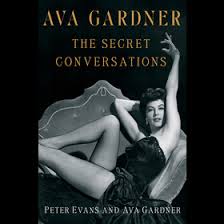 Tough, beautiful, self-depreciating, loving a good joke and
manipulator, this is how I see Ava Gardner after reading Ava Gardner: The Secret Conversations.
What was suppose to be her tell all book, turned into a post
mortem collection of conversations for both Ava Gardner and the author Peter
Evans. Rumor has it that she
canned the idea of this book after telling Frank Sinatra about it. He supposedly asked her what the
publisher was paying her for the book.
He sent her a check for that amount not put it out. In 1990 she released
Ava: My Story without the
participation of Peter Evans.
The kernel of the book began in January 1988 when Ava
approached Evans about ghost writing her memoirs. Subsequently, they had many conversations; about half of
them took place in the wee hours of the morning. Ava died two years after their initial conversation took
place. In 2009, Evans decided to
put his research into a book. I
was not aware that the author had died of a heart attack before finishing The
Secret Conversations.
 |
| Ava married Mickey Rooney when she was 19. |
This book can easily be skimmed. There is repetition,
especially when it comes to Ava pondering whether to actually release this book
or not. She gives you a glimpse
into Hollywood of the 1940’s and 1950’s (It was either a blast or debauchery
depending on how you look at it) and I do mean a glimpse. If you are interested in hearing about
her films, try another source. I
would have loved to hear the story behind working with her idol Clark Gable on
Mogambo.
The most poignant insight into Ava’s last years comes from
the meeting at her place in London with the head of Simon & Schuster, who
wishes to publish her book. Ava
was considered one of the most beautiful women in the world. She prided herself
on swimming and playing tennis in her 60’s. She probably thought these activities would counter her
chain smoking and drinking. She
suffers a stroke that leaves half her face paralyzed and a limp left arm.
Here comes her modified Sunset Blvd moment. When Evans sets up the meeting she
immediately tells him "Call Jack Cardiff.
Tell him I desperately need him."
Jack is one of the top cinematographers. He rearranges the lamps in Ava’s drawing room to make her look her best. Jack tells Peter, "It’s the best I can do discreetly. Remember, it’s always the cameraman,
never the star. Tell her she looks
good even if she doesn’t believe you.
It’s a tribute you must always pay to great beauties when they grow old."
People really had an affectionate and realistic take on Ava. They played her game, which she played truthfully and no one was fooling the other.
Wednesday, July 24, 2013
chaos and COUTURE
 |
| Bricolage (Garbage Bag Clothing) |
 |
| Moth Eaten Chanel |
Only one Stephen Sprouse piece exhibited? Granted his first collection didn’t
come out until 1983/84, which by that time Punk was evolving into New Wave and
the look was evolving from what it had been in 1976. Sprouse was a big influence on the pop, fashion and
the music scene. His first runway show was at the Ritz, a downtown nightclub
now Webster Hall and it was set to the music of Siouxsie and the Banshees. Andy Warhol was a fan and Keith Haring
became a collaborator.
I had great expectations for the exhibit, which were lessened by friends who had seen the show prior to my viewing. It didn’t meet the lowered expectations. It was a disappointment. The video is so large and grainy that you’d have to be a football field away to actually see it. Did we really need to see video footage of a shirtless Sid Vicious? No clothes, but he was wearing the padlock around his neck and the gallery was labeled hardware. It's a stretch. I can’t recall who was quoted, but he said that Sid could not remove it, because he lost the key. Now that is punk.
 |
| Hardware + The Shirtless Sid |
Punk: Chaos to
Couture is at the MET until August 14th.
Tuesday, July 16, 2013
All Stars Everywhere
Tonight's All Star baseball game is at Citi Field. All Stars in Chevys paraded down 42nd St a few hours ago.
Our own Met Matt Harvey is the starting pitcher. No one really know what Matt looks like (he does look different all the time). Jimmy Fallon took note and let Harvey himself, interview fans about Matt Harvey.
 |
| Photo by Keith Eland |
Our own Met Matt Harvey is the starting pitcher. No one really know what Matt looks like (he does look different all the time). Jimmy Fallon took note and let Harvey himself, interview fans about Matt Harvey.
Sunday, July 14, 2013
The Art is in the Book
There are two very similar named and similar in approach art shows that happened this weekend in the Hamptons. ArtHamptons is the bigger of the two. We chose to go to ArtMRKT. All the temporary galleries are situated under a big enclosed tent which makes it easy and fun to browse the contemporary and modern art. Things happen when you don't expect it.
In looking at a fascinating sculpture cut from a dictionary, the artist name looked familiar to me. It was Doug Beube. Our wedding photographer had been working on books at the time he filmed our wedding. This was 15 years ago. My husband and I were able to reconnect with Doug and he took us through his process. I'm always blown away by the unending creativity of artists. Using a dictionary, (opened to the word low-life) he created a sculpture. He told us that its necessary to position the book in the middle to be able to work with it. The artwork is similar in structure to the Roman heads on display at the MET. He doesn't coat the sculpture with any material as he wants it to still be a living breathing book.
Doug is represented by the JHB Gallery. Their website has a few more works by Doug to explore. There is nothing like seeing art in person, but I recommend checking out these sites to see his creations. They are fascinating.
 |
| Masked Words by Doug Beube |
Doug is represented by the JHB Gallery. Their website has a few more works by Doug to explore. There is nothing like seeing art in person, but I recommend checking out these sites to see his creations. They are fascinating.
Tuesday, July 02, 2013
Another NY Institution Goes Way Of The Budget
The beloved metal tags you get with an admission to the Metropolitan Museum of Art are gone. As of yesterday, the museum stopped using them. The rising cost of metal and fewer and fewer manufacturers have made the buttons obsolete. Now you get a paper sticker.
Having seen Chaos to Couture (I will get to that in a later post) on Friday, I was one of the last visitors to receive a robin's egg blue button. According to the article in the NY Times, the color might actually be Mole, huh? The buttons were introduced a year after they enacted the suggested price policy in 1971. According to the Times they replaced both paper and stick pins. The buttons were a souvenir to the patron for her/his donation. They were costing the museum about 3 cents per button, up from 2 cents a year ago. The paper tickets will cost a penny each. To cover the 1 million visitors a year, the museum would manufacture 1.6 million buttons a year and they were made by a local company in Chelsea. In keep with the times, the new paper tickets will have space for corporate sponsors.
Like the Ramones, CBGB's and subway tokens, New York no longer has the MET button.
 |
| Friday's Button RIP |
Tuesday, June 18, 2013
Darlene
 Since I'm on my Darlene Love Train (pun intended), I'm posting a few photos from her interview with Brian Gari yesterday at Barnes and Noble. She was promoting the re-release of her book, My Name is Love. Brian enhanced the interview by bringing audio clips (The Blossoms first recording, Stumble and Fall, Vickki Carr's version of He's A Rebel) and video clips (Shindig). Loved the clip of her performing with the Righteous Brothers. Darlene closed the evening with a performance of Lean On Me.

The Life Of A Very Clean Tramp
-Richard Hell
from I Dreamed I Was A Very Clean Tramp
 It’s important to know what excited Richard Hell. It leads
to a clearer picture of his life until age 34, as he lays it out in his
autobiography. He followed
that quote by saying he and friend/fellow Television bandmate Tom Verlaine
disagreed on how they wanted their music to sound. According to Hell, he was
exhilarated after the band’s first performance. Verlaine was not.
It was the end of Television for Hell before it really even began. This is a pattern that would follow him
throughout his music career.
Richard Hell’s influence on both music and culture is
understated. I mentioned I was
reading his book, I Dreamed I Was A Very Clean Tramp and only 1 of the 20
people I spoke to had a passing knowledge of him. A handful of them were my
partners in crime in frequenting the NY clubs mentioned in the book. We lived these times and Hell still
didn’t register with them. It’s
not a name you would forget. He
was the first to have choppy spiky hair, wear torn closes, paint words on them
and use the safety pin as a fashion accessory. He performed with abandon.
I never paid much attention to Television or Richard
Hell. I knew the song Blank
Generation. I was into bands with
tight songs mixed with pop sensibilities.
Even the anarchy of the Sex Pistols could fit in with that description,
although I wasn’t a big fan of them either. I love Blondie and the Ramones, both of which Hell has
distain for. He mentions that
Chris Stein (Blondie) and Dee Dee Ramone auditioned for Television but didn’t
make the cut. While Dee Dee had
his problems, I think both fared better with their respective bands.
The writing is erratic, but so was his life. He was a heroin addict who kept
journals. Without the journals how
would he be able to describe in such detail all of his sexual conquests
breasts? (There are many references.)
His childhood was unremarkable. He grew up in Kentucky. It’s
not a charmed life, but it certainly isn’t the broken home of a truant which he
later became. His father dies at an early age. At sixteen, he and
best friend Tom Miller (later re-christened Verlaine) have their Thelma and
Louise moment by fleeing home and driving a car as far as Alabama where they
get picked up by the cops. They
were heading to Florida. Shortly
after that Richard earns enough money to come to New York City. His mother
agreed to let him go at 17. His
early tales of a grizzly Lower East Side are accurate and intriguing. He has many menial jobs, but it was
possible to live off of next to nothing those days in the city. The book then starts to read like many
a candied musician memoir: lots of
drugs, lots of sex, record company screws artist. (Somehow Keith Richard’s book didn’t fall into that trap.)
His description of drug addition has become the norm for
these autobiographies:
Addiction is lonely.
It starts as pure pleasure, and the degeneration, in a few quick years,
into a form of monumental compulsive-obsessive condition is actually more
psychological than physical. One
the drug use has replaced everything else, life become purely a lie, since in order
to keep any self-respect, the junkie has to delude himself that use is by
choice.
Richard doesn’t stick with anything that isn’t
solitary. He can’t hold on to
jobs, he moves from one band to the next.
He didn’t hang around long enough with either Television or The
Heartbreakers. When both bands
released their debut albums, he was long gone.
It makes sense that he eventually settled in a career that
is solitary: a writer.
Probably most overlooked was how smart he was about
marketing his bands early in his career.
He went to the owner of the newly opened CBGB’s and asked for and got a
Sunday night residency. He knew the importance of having people know where to
see the band and being able to see them on a regular basis. He created posters for specific shows
using band photographs as well as eye-catching graphics and text. He gave a performance.
There are passages that are so ripe with description that
you can see the scene play out in your head. They are also very humorous. In describing the girls in his neighborhood:
They were a skittish herd of scaled-down giraffe girls with
pretty, flat kitty-cat faces. I
liked all of them. We were going
to drive into the country out by Versailles, where another of the giraffe girls
lived on a horse farm. It’s those moments that make reading about his early
childhood so rewarding.
His tale stops cold at age 34, which is when he decided to
get out of music. He has since
dipped his toes back in on several occasions, including a stint with the band
Dim Stars. Life in New York in the
70’s and early 80’s was raw, gritty and oh so much fun.
Thursday, June 13, 2013
Twenty Feet From Stardom
I saw it as part of the NY Times Films Club series. Following the movie was a Q and A with
director Morgan Neville and three of the movie subjects: Darlene Love, Merry Clayton and LisaFischer.
Darlene is better known as the voice of the Crystals among
other bands. Remember He’s Sure
The Boy I Love, He’s A Rebel and Christmas Baby Please Come Home (she is
actually credited on the track)? In the 1960’s her group The Blossoms were the
hottest session singers in the country.
Gimme Shelter probably wouldn’t be a classic without the voice of Merry
Clayton. It’s worth seeing the
movie just to hear her tell the story of the recording of the song. If you saw the Rolling Stones perform
that song live in the past 25 years, you heard Lisa Fischer bringing down the
house with Mick Jagger.
In Fischer’s humility she said there is no way she would come
close to the truth that Merry delivers on that record, so she could only be
inspired by her performance. That is the beauty of these women, they all truly
like, respect and believe in one another.
There doesn’t seem to be a cutthroat rivalry among them either then or
now. Merry thanked Darlene for her
tutoring early on in her career. Darlene said The Blossoms, were in such demand
that she would refer producers to Merry.
She also said that Merry was the best or she wouldn’t have recommended
her for the job. This of course
didn’t exclude playful digs between Merry and Darlene. Darlene was ready to pass the plate
after Merry’s heartfelt preacher-like tale of growing up in the church.
Darlene and Merry both had fathers who were Pastors. Singing in a church choir gave them the
tools to be the best session singers. They knew when to sing and how to
delivery it. At the time Darlene
was breaking into the business, session singers were white and rather
restrained. As Bette Midler says
in the film, they knew when to put their hands up and when to lean into the mic
and that was about it. Darlene and
the Blossoms couldn’t read music but they could feel it and could run with
it. They made the producers’ job
easy. They upped the ante for any
singer.
You will be blown away by this impressive and diverse
contribution of The Blossoms:
That’s Life -Frank Sinatra
Johnny Angel -Shelley Fabares
Monster Mash –Bobby Pickett
Rockin’ Robin –Bobby Day
The Shoop Shoop Song (It’s In His Kiss) -Betty Everett
Chain Gang –Sam Cooke
You’ve Lost That Lovin’ Feeling
Unchained Melody
(You’re My) Soul and My Inspiration –Righteous Brothers
River Deep Mountain High –Ike and Tina Turner
It wasn’t always easy. There were failed solo careers. Darlene Love was contracted to Phil
Spector. She finally got out of
her deal, signs with Gamble and Huff and then they sell her contract back to Phil
Spector. Could it be more
devastating? She decided to clean
houses. As she pointed out Tuesday
night when referring to Phil Spector, what goes around, comes around.
The film also highlights Judith Hill who was set to backup
Michael Jackson on his last unfulfilled tour. She is the youngest of those profiled. I had no idea she was a contestant on
the Voice this season. She is
pursuing a career as a solo artist and unlike the other women profiled, she
writes her own music, which gives her an advantage. It’s probably what moved Sheryl Crow from the background to
the forefront. Sheryl appears
briefly in the movie. Also
appearing are Bruce Springsteen, Stevie Wonder and Sting.
There has to be a lot of valuable footage left on the
cutting room floor. The interviews are engaging and entertaining, which I think
is a testament to the performers as well as the filmmakers. I would love to see the “rejects” from
Morgan Neville. I’d pay to view on
the web. It’s a no-brainer.
Twenty Feet From Stardom is a joy. It will have people talking. The archival footage is riveting. Don’t be surprised if this movie revitalizes the careers of
these highly talented musicians.
Of note: I
focused on the women, but The Waters should be mentioned. They are featured on Michael Jackson’s
Thriller: Julia, Maxine and of course, Oren.
Of second note: The movie was produced by Gil Friesen. He was chairman of A&M records and I had the pleasure of working with him. He's one of my favorite record company people. Sadly he passed away last year, but not before hearing his film was accepted to the Sundance Film Festival.
Of second note: The movie was produced by Gil Friesen. He was chairman of A&M records and I had the pleasure of working with him. He's one of my favorite record company people. Sadly he passed away last year, but not before hearing his film was accepted to the Sundance Film Festival.
Monday, June 03, 2013
Dessa's Ghost
Call Off Your Ghost is a new one from Dessa.
 The song is based on a true story of running into a former lover at a friend's wedding. Yikes. That sounds uncomfortable. Her record company describes her as “Mos Def plus Dorothy Parker”. It sounds like she's been listening to a lot of Luscious Jackson.
The Minneapolis native weaves her production much like the ladies of Luscious. Dessa is labeled an emcee/writer, but that doesn't paint a big enough picture. I have a soft spot for Minneapolis artists (Trip Shakespeare, Prince, Husker Du). They put out good records. Dessa's album comes out the end of the month.
Speaking of Luscious Jackson, rumor has it that Jill, Kate and Gabby have mastered a new album and we should be hearing something new from the ladies this year.
Wednesday, May 22, 2013
What Makes You Smile?
I'm walking the dog up 1st Avenue this afternoon. Without seeing anyone, I hear a person singing in a loud/bad Liverpudlian accent "and I'm happy just to dance with you". I then see a white haired man wearing knee socks, camouflage shorts and a Chicago T-shirt walking past me. The T-shirt commemorated the band's 1989 tour. He was thoroughly enjoying his walk and the music.
Friday, May 17, 2013
Someday, Someday, Maybe
 The story centers around Franny Banks, the actress/waitress
who is trying to make a go of life in New York City and realizing her dream of
one day being interviewed on the stage of the 92nd St Y. That would mean she had made it as an
actress, a well-respected theater actress. She has 6 months left in her self imposed quest to make it
happen. Franny’s a little bit Lorelai and probably a lot of Lauren. Lauren had said in an interview that
it’s loosely based on her life and what she couldn’t remember, she made
up. She credits Diane Keaton with
the suggestion to put these stories into a book.
The story is about struggle and self-realization. Anyone who has a dream, no money and
lives on their own, can relate to it.
Franny occasionally asks her dad to supplement her income. She deals with each situation with
self-depreciating humor and determination. The story also drives home that support, understanding and
kindness can come from unlikely resources.
 Lauren uses reproductions of Filofax pages to show the
passing days. If you don’t
remember Filofaxes, they were the lifeblood of daily organization. Before Palm, Blackberry or the smart
phone, there was the Filofax. At the end of the year I would flip through mine
and think, wow I guess I did accomplish something. The voicemail messages from her English teacher father are
sarcastic and sprayed with love. You can hear his voice in your head. Franny had to have a cool, good-looking
boyfriend, who you know will turn out to be a jerk. I believe a guy like James is a rite of passage for every
single girl in the city. I could
relate.
Loved reading this book. Someday, Someday, Maybe is sweet, charming, snappy and
engrossing. Oh did I mention, it’s
also well written.
Tuesday, April 30, 2013
Following The Following
I started watching The Following for one reason: Kevin Bacon. He is one of our best actors and he played Fenwick in Diner, that alone is reason enough to love him.
The three episodes had me. It was like a page turner on TV, then.....
http://www.tvfanatic.com/2013/04/the-following-season-finale-review-finishing-the-story/
Bacon plays Ryan Hardy and ex-FBI agent who captured a serial killer, Joe Carroll who is now running a cult via his jail cell. Hardy is called back into action to track down Carroll, despite being fired from the FBI. He's an alcoholic who we don't see drinking after the first few episodes.

The show really got stupid when Carroll escapes from jail with the help of the warden (the beginning of a tiresome show of law enforcement being totally inept). He exits into a helicopter and Hardy misses him by seconds. This will be played out in every episode, as well as several dead people (most of them are FBI and lots of stabbing. It became tiresome, but I held out and watched the whole season which concluded last night because Kevin Bacon is a good actor.
Who on this show gave the ok to light the show the way they do? Regardless of them being in a dark room, why does it have to be so dark the viewer can't see anything? There is a big fight scene at the end, but I had no idea what was happening because I couldn't see anything. This has been going on all season.
For my amusement, I could not stop reading online reviews of the season finale. I have been laughing out loud all day. I have to share some of my favorite lines. It's clear that I am not the only one to find that that show lost it's way early in it's first season. It has been renewed by Fox.
- Sweet Claire is dislocated herself, waking in a dark room that shouldn't surprise her because hey, everything in the set design is dark.
- Weston [an FBI agent], convinced they don't have to play by Joe's rules, utters perhaps the finest line of the series thus far: "WE CAN CHANGE THE STORY." (If right after this you screamed at your television "WE CAN CHANGE THE CHANNEL," then tweet me so we can become best friends.)
- Bodies move around in space (I really do apologize but I can't see anything on this show) until somehow, someway, Hardy and Joe's tussle lands them in a boathouse full of gas tanks.
- THERE SHE IS, HARDY, THERE'S YOUR CRAZY EX-GIRLFRIEND STABBING YOU NOT IN THE BACK BUT RIGHT IN THE STOMACH OH HOW DID WE MISS THAT ONE.
- And there are days when I think the high school girls on Pretty LIttle Liars are a collective Sherlock Holmes compared to the FBI on this show.
- Seriously, no one can die from a gut wound on this show, can they?
- This show really tests my facial recognition.
- Are you surprised that law enforcement didn’t rise en masse and demand that the second season of The Following be killed for portraying all cops as mentally slow and unable to hit a target?
- Ryan goes to the address that Joe described in the book. There he finds Emma and gets syringed in the neck. Because he’s an idiot.
Monday, April 08, 2013

Friday, April 05, 2013
Remembering Roget Ebert
Richard Brody pays tribute to Roget Ebert in this New Yorker piece. It's worth reading for Roger's thoughts on what it takes to make a film and what a filmmaker puts into her/his work. Being able to appreciate what goes into making a film, is probably what made him so good at critiquing them.
Monday, April 01, 2013
Phil Ramone
Every obituary I've read about Phil Ramone talks about the artists he worked with which is long and illustrious. Of course there is Billy Joel; Phil's first production with him was The Stranger. That album was the beginning of catapulting Joel into music legend status. Joel has always given Phil credit for his work. Phil was mainly engineering at that point in his career. The Stranger was one of many in his string of big time producer credits. Phil was behind the board for the famous duet records of Ray Charles and Frank Sinatra. He has numerous Grammys.
Phil signed on to produce mini-king's first record. The band was schooled and influenced by the great 60's and 70's pop songs, so working with Phil was a dream come true. The band's founding member Michael LaMorte remembers working with Phil.
While he was completely comfortable in his own skin, he could sense any sort of discomfort that most artists tend to have - especially before making a record, and would remedy this by describing the studio, or a place you have only read about - in great detail just to let your mind wander, thus putting you at ease. Not many people have a gift like that. Sort of a soothing/descriptive way about Phil. I learned so much from him - I wish every artist could work with someone like Phil at some point in their career.
 |
| Back Cover mini-king unreleased album |
Phil was upbeat and had fantastic stories to tell. He lived and breathed music and then shared it with us.
Related Note: I watched the documentary Family Band: The Cowsills Story on Showtime. Ironically their first big hit The Rain, The Park and Other Things was recorded at A and R studios in New York. Phil Ramone owned A and R Studios.
Friday, March 29, 2013
Unknown Pleasures
 Chances are you are British if you saw Joy Division live. They had a tour of the US planned, but they never made it here, another short lived band-span (just like the Sex Pistols). I don't even think the band existed for 3 years.
Peter Hook's book (I had to say that), Unknown Pleasures does a great job of capturing the exciting, but limited time he lived as a member of Joy Division. I felt like I had a bird eye's view of what it's like to be a 20 year old in a band gaining momentum in England in the late 70's. Read this book to get insight into their recording process, the trials and tribulations of performing live (when a show wasn’t cancelled) and the dynamics of a band.
Peter owns his behavior. He lets his immature self shine through. I think a lot of people forget just how young and inexperienced these musicians were. It was interesting reading this book back to back with Rotten. They occur in the same time period and they were the same age when starting their bands. In the case of Joy Division, they had a manager who cared and got them an exceptional record deal even by today’s standards. (The band’s royalty rate was 58% to Factory Records 42%. The band didn’t get an advance, but retained financial and creative control.) We all know that The Sex Pistols manager Malcolm MacLaren didn’t have a clue and no one saw any money. Not that the members of Joy Division got rich from record sales. Money came later.
There is plenty in the book about Ian Curtis, the band’s lead singer who suffered from epileptic seizures and killed himself on the eve of the band’s US tour. Ian underplayed his illness and band members went along with him. They just wanted to play music to make enough money to quit their day jobs.
Martin Hannett, their record producer believed for a record to have a lasting effect and impact it has to have clarity and separation. Joy Division’s records certainly have that. Originally Peter and Barney hated the sound of their album Unknown Pleasures. They wanted it harder and harsher, sounding more punk, which was hitting its peak at that time. Martin had an interesting way of recording the drums: which was one drum at a time, meaning the snare drum part was recorded by itself, the bass drum part by itself, etc. I can’t imagine the music having the same feel or a musician being able to play that way. That being said, Martin definitely carved out a distinct sound for the band.
There is a thread of humor in Unknown Pleasures. Peter in a typical British way takes a piss on everything including himself. Apparently Martin wasn’t a fan of his and he describes Martin’s feelings about being in the studio. “He used to get pissed off with us, especially me and Barney; we were about as welcome as a dog at a bowling alley.” It should be noted that Martin was an eccentric.
There does seem to be many similar band experiences in 1970’s England (mainly in the Manchester area). This is what I’ve taken away from reading these memoirs.
- Apparently no one properly drives a car in England.
- Practical jokes were constantly played on each other. I read a lot of “let’s jape their room” or “jape their bus”. Jape is archaic for an act of mischief. We need to revive the word.
- Bands experienced lots of cancelled shows, whether it was due to band reputation or circumstances. I doubt that either Joy Division or The Sex Pistols put in their 10,000 hours. There wasn’t enough time and venues were limited.
On a packaging note: If you are old enough to remember Joy Division when they were a band, you might get this reference. The book looks like a 3/4" video tape.
Friday, March 15, 2013

Subscribe to:
Posts (Atom)